


Loved by 1,000+ Indian families
Pure A2 Gir Cow Ghee & Desi Buffalo Ghee Made by Bilona Method
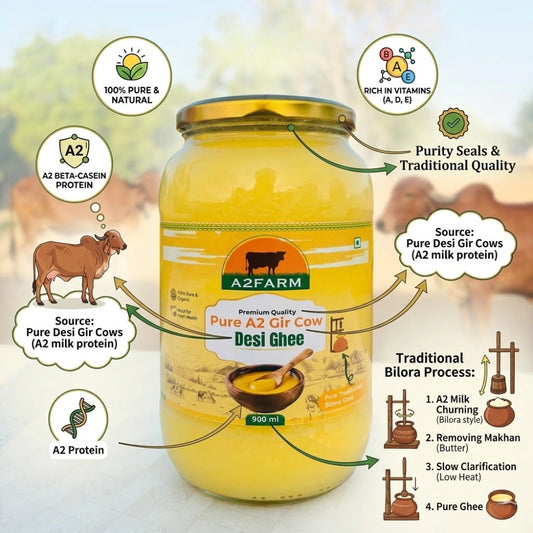
Buy pure A2 bilona ghee online, made fresh from indigenous Gir cows. Hand-churned using the traditional Bilona method. Our Ghee has a rich aroma, granular texture, and lab-tested purity. Delivered across India.
- Lab-Tested
- 100% Pure
- 20+ Yrs Trust

100% Pure
Lab TestedWhy 1,000+ Families Choose A2 Farm
-

The Taste Your Grandmother Made
Every spoon of our A2 bilona ghee carries the warmth and flavor of a home kitchen.
-

Lab-Tested. 100% Pure.
Every batch is quality-checked before it reaches you. No additives, no preservatives.
-

Handcrafted Using the Bilona Method
We hand-churn curd, not cream, to separate fresh white butter. Then slow-cook it to golden perfection.
-

20+ Years of Dairy Excellence
Shree Balaji Dairy has been raising indigenous Gir cows and making pure desi ghee for over two decades.


100% Pure Desi Ghee
-
Pure A2 Gir Cow Desi Ghee | Hand-Churned by Bilona Method
Buy pure A2 Gir Cow Desi Ghee made fresh from the milk of indigenous Gir...
Regular price From ₹ 1,249.00Sale price From ₹ 1,249.00 Regular priceUnit price per₹ 1,599.00Sale -
Pure Desi Buffalo Ghee | Hand-Churned by Bilona Method
Buy pure Desi Buffalo Ghee made fresh from the milk of indigenous desi buffaloes. We...
Regular price From ₹ 849.00Sale price From ₹ 849.00 Regular priceUnit price per₹ 999.00Sale -
Premium A2 Gir Cow Ghee + Pure Desi Buffalo Ghee | Bilona Method | Combo Pack
Get both in one box. Our Premium A2 Gir Cow Ghee and Pure Desi Buffalo...
Regular price From ₹ 1,849.00Sale price From ₹ 1,849.00 Regular priceUnit price per₹ 2,149.00Sale




Real People. Real Purity. Real Reviews.


In this day and age, finding truly unadulterated dairy products is a challenge—but this shop delivers on quality and purity. Their A2 ghee is rich and authentic, and paneer is incredibly fresh, nothing like the mass-produced versions filled with additives. It’s refreshing to see a place committed to providing real, untainted dairy products. Highly recommended for people who value quality and trust.

I recently tried A2 Farm's ghee and it’s a game-changer in my kitchen. Sourced straight from village farm-raised cows, it brings a rich, authentic flavor to every dish. I appreciate the clear commitment to quality—it's honest, simple, and truly the real deal.

This ghee is really good. It tastes great, smells nice, and makes food taste better. Very pure and healthy.


How We Make Our Bilona Ghee, Step by Step


Fresh A2 Milk from Our Cows

Turning Milk into Curd Naturally

Hand-Churning the Curd (Bilona Method)

Collecting Desi Makhan

Slow Heating on a Low Flame

Filtering for Purity

Packed with Love, Delivered Fresh
Healthy Recipes
View all
How to Make the Perfect Ghee Jeera Rice Bowl at Home (Restaurant Style)
I still remember the first time I tried making jeera rice with ghee on my own. It was a Sunday afternoon; my family had just come back from a long drive, and everyone was hungry. My mother was tired, and I thought, "How hard can jeera rice be?" Turns out, pretty hard when you do not know the right steps. The rice came out mushy, the cumin burned, and the whole thing smelled nothing like what we eat at dhabas. That small failure pushed me to actually learn. I watched videos, read my grandmother's handwritten recipe book, and tested it over and over again. Now the ghee jeera rice bowl I make at home genuinely tastes better than what most restaurants serve. And today, I want to share everything I learned so you do not have to make the same mistakes I did. What Makes a Ghee Jeera Rice Bowl Special It Is Simple, but It Is Not Basic A lot of people think jeera rice is just boiled rice with cumin thrown on top. That is not it. The real magic happens during the tempering, or what we call tadka in Hindi. When cumin seeds hit hot desi ghee, they crackle and release an aroma that you simply cannot fake with any substitute. The quality of ingredients matters more here than in almost any other recipe. Because there are so few components, every single one shows up in the final taste. If the ghee is bland, the rice will be bland. If the rice is not soaked properly, it will turn sticky. If the jeera burns instead of crackling, the whole bowl tastes bitter. This dish works as a quick lunch, a satisfying dinner, and honestly one of the best meal prep options if you batch-cook rice for the week. It pairs with dal, curry, raita, or even just a simple sabzi, and it never feels out of place. The Bowl Format Changes Everything Instead of just plating jeera rice as a side, building it as a proper ghee jeera rice bowl makes it a complete meal experience. You can add a scoop of dal on one side, a spoonful of raita on another, and finish with fresh coriander leaves on top. It looks good, it feels hearty, and it gives you the comfort of a proper home-cooked meal in about 30 minutes. Ingredients You Will Need For the Rice Basmati rice (1 cup, long-grain preferred) Water (2 cups for soaking, plus fresh water for cooking) Salt (to taste, around 3/4 teaspoon) For the Tadka A2 ghee or desi ghee (2 tablespoons, plus a little extra to finish) Cumin seeds / jeera (1 teaspoon) Whole spices (2 cloves, 1 small bay leaf, 1 green cardamom, optional) Salt (adjust after mixing) To Finish the Bowl Fresh coriander leaves (2 tablespoons, finely chopped) Lemon juice (a small squeeze, optional but recommended) A drizzle of A2 ghee right before serving A Note on the Ghee This is one recipe where the ghee is not just a cooking medium. It is the actual flavour. I use A2 Gir Cow Ghee from A2Farm because it comes from the traditional Bilona method, which gives it a deeper, nuttier aroma compared to commercial ghee. You can also try their Pure Desi Buffalo Ghee if you prefer a slightly milder finish. The difference shows up clearly in this recipe because the aroma of the ghee is front and centre. A good quality A2 ghee makes the whole kitchen smell like a proper Indian kitchen. Step-by-Step Recipe for Ghee Jeera Rice Bowl Step 1: Soak the Rice Soak the rice in water for at least 20 to 30 minutes before cooking. This is the step most people skip, and it is exactly why their rice ends up sticky or gluey. Soaking lets the grains hydrate evenly so they cook fluffy and separate. After soaking, drain the water completely and rinse once more under cold water. Step 2: Cook the Basmati Rice Add the soaked rice to a pot with fresh water. The hot water to rice ratio I follow is 1.5 cups of water for 1 cup of soaked basmati. Add salt and a few drops of ghee to the water. Bring it to a boil on medium heat, then reduce to low, cover, and let it cook for about 12 minutes. Once the water is absorbed, take it off the heat and let it rest, covered, for 5 more minutes. Do not lift the lid during this rest time. This is how you get fluffy rice without making it mushy. If you are using a pressure cooker, cook on medium flame for 1 whistle, then let the pressure release naturally. The texture is slightly softer but still works well for this bowl. Step 3: Prepare the Tadka While the rice rests, heat a small pan on medium flame. Add desi ghee and wait until it shimmers, not smokes. Drop in the whole spices first if you are using them, cloves and bay leaf, and let them sizzle for about 15 seconds. Then add the cumin seeds. You will hear them crackle almost immediately. Let them go for about 20 to 25 seconds until they turn a shade darker and the aroma becomes nutty and deep. Do not walk away during this step. The line between crackling jeera and burned jeera is only a few seconds. Step 4: Fold the Rice Into the Tadka Now gently fluff the cooked rice with a fork. Add it into the pan with the tadka and fold carefully using a spatula. Do not stir aggressively or you will break the grains. The goal is to coat every grain with the ghee and cumin without compressing the rice. Taste and adjust salt here. Step 5: Finish with Ghee and Serve This is the tip that makes the biggest difference in aroma: add a small drizzle of fresh A2 ghee over the top just before plating. This step keeps the fragrance intense because cooking burns off some of the ghee's natural scent. Top with freshly chopped coriander leaves and a squeeze of lemon if you like a slight brightness. Your restaurant-style jeera rice is ready. How to Get Fluffy, Non-Sticky Rice Every Time Getting fluffy rice is the single most important skill in this recipe. Here is what consistently works: Soak the rice for at least 20 minutes. This is non-negotiable if you want separated grains. Use the right water ratio. For soaked basmati, 1.5 cups of water per cup of rice is usually perfect. For unsoaked rice, go up to 2 cups. Rest the rice after cooking. Five minutes of covered rest after the heat is off allows the steam to finish the job evenly. Fold, never stir. When mixing with the tadka, use a gentle folding motion instead of mixing like you would a curry. This keeps the grains intact. Add ghee to the cooking water. Just a few drops prevent the grains from clumping together during boiling. These are the same techniques used across top cumin rice recipes, and they work every single time once you build the habit. How to Build the Bowl and Serving Ideas A ghee jeera rice bowl shines when you treat it as the base of a full meal rather than a side dish. Classic Combinations With dal: A simple tadka dal or moong dal on the side of the bowl makes this a complete protein-rich vegetarian meal. The dal soaks into the rice from the edges and creates a natural, comforting sauce. With raita: Cucumber or boondi raita on the side cools the bowl and adds a creamy contrast to the warm, fragrant rice. With sabzi: Any dry vegetable preparation, aloo jeera, bhindi, or lauki, works beautifully. The simplicity of the rice lets the vegetable shine. For meal prep: Cook a larger batch of rice and store in an airtight container. Reheat with a tiny drizzle of ghee in a pan on low heat. It comes back to life within a few minutes and tastes just as good as fresh. Why A2 Ghee Fits This Recipe Better Than Regular Ghee Cumin rice with ghee is essentially a two-ingredient recipe in flavour terms. The cumin provides warmth and earthiness. The ghee provides richness, aroma, and a finishing depth that no oil can replicate. A2 Gir cow ghee specifically is made using the traditional Bilona method, where curd is first churned to extract butter, and then that butter is slowly heated to produce ghee. This process preserves more of the natural fat-soluble vitamins and gives the ghee its characteristic grainy texture and rich smell. If you have only ever used commercial ghee or dalda, switching to a good quality A2 ghee for this recipe will genuinely change your experience. You can browse the full range at A2Farm and find the one that suits your taste and budget. For more ghee-based recipes that my family regularly makes, check out the ghee khichdi recipe, paneer ghee roast, and garlic mushrooms with A2 ghee on the A2Farm recipe blog. If you are curious about how ghee fits into everyday Indian cooking, the guide on Indian recipes using ghee and cooking with ghee is a great starting point. 5 FAQs About Ghee Jeera Rice Bowl Q1. Can I use any rice for this recipe? Basmati rice works best because its long grains stay separate and fluffy after cooking. Some traditional recipes use jeera samba rice, which is a shorter-grain variety popular in South India with its own earthy flavour. Avoid regular short-grain rice for this dish because it tends to clump and turns the bowl heavy. Q2. Is ghee rice the same as jeera rice? Not exactly. Jeera rice centres the flavour around cumin seeds with just enough ghee to carry the aroma. Ghee rice is generally richer, often includes more whole spices, caramelised onions, cashews, and sometimes raisins, and is more associated with festive or restaurant-style meals in South India. Both are delicious but they serve different purposes on a menu. Q3. Can I make this in a pressure cooker? Yes. Soak the rice as usual, then cook in the pressure cooker with the right water ratio on medium flame for one whistle. Let the pressure release naturally before opening. The texture is slightly softer than stovetop but still works perfectly for the ghee jeera rice bowl format. Q4. What pairs best with this dish? Dal, vegetable curry, raita, and simple home-style sabzi are the most natural pairings. Tadka dal is particularly good because the cumin in the dal echoes the jeera in the rice and creates a harmonious, cohesive meal. A cold boondi raita is a close second. Q5. Why does A2 ghee specifically work better in this recipe? Because this dish relies entirely on the ghee's aroma. A2 Gir cow ghee made using the Bilona method has a stronger, more nuanced fragrance than mass-produced ghee. Since there are no heavy spices or bold masalas to mask it, the quality of the ghee comes through directly in every bite. It is not marketing. It genuinely tastes different. 2 Quick Tips Before You Start Tip 1: Add fresh ghee at the end, not just at the beginning. The ghee you use for the tadka gets partially cooked and loses some of its raw aroma during the frying process. Adding a small drizzle of fresh A2 ghee over the finished bowl keeps that warm, buttery fragrance alive in your serving. Tip 2: Always soak the rice before cooking. This is the most consistent pattern across every good jeera rice recipe. Soaking for 20 to 30 minutes softens the grains evenly so they cook quickly without breaking. It is the single biggest difference between restaurant-quality fluffy rice and the sticky mess most home cooks end up with the first time. The Takeaway The ghee jeera rice bowl is one of those recipes that looks simple on paper but rewards you when you get every detail right. Soak the rice, crack the jeera in hot ghee, fold gently, and finish with a drizzle of fresh desi ghee and coriander. That is really all there is to it. What makes it special is the quality of ingredients and the attention you give each step. A bowl of restaurant-style jeera rice made at home with proper A2 ghee and perfectly fluffy basmati rice is something that never gets old. It works for a weekday lunch, a laid-back family dinner, or a meal prep session that sets you up for the whole week. Try it once properly, and you will stop ordering plain rice at restaurants altogether.

How to Make A2 Ghee Garlic Khichdi: The One-Pot Indian Comfort Food You'll Crave Every Week
There are some meals that just feel like a warm hug. For me, A2 Ghee Garlic Khichdi is exactly that. I still remember the first time I watched this dish come together at home, the pressure cooker letting out steam, the smell of garlic hitting the hot pure desi ghee, and that golden tadka being poured over soft moong dal and rice. It smelled like home. It smelled like care. This A2 ghee garlic khichdi recipe is not just about flavor. It is about making something nutritious, comforting, and deeply rooted in Indian kitchen tradition without spending hours cooking. Whether you are feeling low, need a light dinner, or just want to eat something real after a long day, this dish delivers every single time. And when you make it with A2 Gir Cow Ghee, the result is on a completely different level compared to anything made with regular refined oil. Why A2 Ghee Makes Garlic Khichdi Taste So Much Better Most people underestimate how much difference the ghee makes in a dish like this. Khichdi is a simple recipe by nature, so every ingredient matters. When you use pure desi ghee made through the Bilona method, you are adding something that is not just fat. It is flavor, nutrition, and depth. A2 Gir Cow Ghee has a naturally rich aroma that activates the moment it hits a warm pan. When garlic goes into that hot ghee, it creates a tadka that fills the entire kitchen. That smell alone is enough to make everyone come running to the table. Beyond aroma, A2 ghee contains healthy fatty acids and is much easier to digest than processed oils. For anyone who eats khichdi as a light meal or sick-day food, this matters a lot. Your stomach feels settled, not heavy. If you want an even richer, creamier finish, Pure Desi Buffalo Ghee works beautifully too, especially in the cooler months when you want something more filling. Ingredients for A2 Ghee Garlic Khichdi For the Khichdi Base Rice: 1 cup (short grain or sona masoori works best) Moong dal (split yellow): half cup Water: 3 to 3.5 cups Turmeric: half teaspoon Salt: to taste Ginger: half inch piece, grated For the Garlic Tadka A2 Gir Cow Ghee: 2 to 3 tablespoons (do not reduce this) Garlic: 6 to 8 cloves, sliced thin or roughly chopped Cumin seeds (jeera): 1 teaspoon Dried red chili: 1 (optional) Asafoetida (hing): a small pinch Salt: a small pinch for the tadka For Serving Curd, pickle, or papad A small spoon of extra A2 ghee on top while serving Prep Tips Before You Start Cooking Soaking and Rinsing Rinse the rice and moong dal together under cold water 2 to 3 times until the water runs mostly clear. Then soak them together for 20 to 30 minutes. This step helps the moong dal cook faster and gives the khichdi a softer, creamier texture that coats the rice beautifully. Garlic Preparation Slice the garlic thin rather than mincing it finely. Thin slices turn golden and slightly crispy in the ghee tadka, which gives a much better texture and flavor than paste or minced pieces. This is the kind of detail that separates a good garlic khichdi from a great one. Step-by-Step Pressure Cooker Method This is the most popular way to make khichdi in Indian homes and it is the fastest method. A pressure cooker makes the moong dal and rice perfectly soft without babysitting the pot. Step 1: Build the Base Heat 1 tablespoon of A2 Gir Cow Ghee directly inside the pressure cooker on medium flame. Once it warms up, add a small pinch of asafoetida and half a teaspoon of cumin seeds. Let the cumin seeds splutter for about 30 seconds. Add the grated ginger and stir for another 30 seconds. Step 2: Add Dal, Rice, and Spices Drain the soaked rice and moong dal and add them into the cooker. Stir everything together for about a minute so the ghee coats the grains. Add turmeric, salt, and water. Give it one good stir. Step 3: Pressure Cook Close the lid and cook on medium flame for 3 whistles. Turn off the heat and let the pressure release naturally for 10 minutes. Do not rush this step. Natural pressure release helps the khichdi develop that smooth, soft texture that makes it genuinely comforting. Step 4: Check the Texture Once you open the lid, stir the khichdi gently. It should look creamy and slightly thick, not dry. If it looks too thick, add a splash of warm water and stir over low heat for a minute. This is normal and easy to fix. Step 5: Make the Garlic Ghee Tadka This is the most important step. Heat 2 tablespoons of A2 Gir Cow Ghee in a small pan on medium heat. Do not use high heat here. Add the sliced garlic and let it cook slowly until it turns golden and fragrant. This takes about 2 to 3 minutes. Add the remaining cumin seeds and a dried red chili if you like a little heat. The moment everything smells deeply aromatic, pour the entire tadka over the cooked khichdi. The sizzle and smell at this moment is something else entirely. The Garlic Tadka Section: Getting It Right Every Time The ghee tadka is what separates this recipe from a plain desi ghee khichdi recipe. The garlic is the soul of this dish and it needs to be treated with care. Never rush the garlic. Medium heat lets the garlic turn golden slowly, releasing its natural sugars and developing a rich, nutty aroma without burning. Burnt garlic tastes bitter and ruins the entire tadka. Use enough A2 ghee for the tadka. Two tablespoons is the minimum. The ghee carries the flavor of the garlic and jeera into every bite of the khichdi. When you reduce the ghee, you reduce the whole experience. For a deeper flavor, you can add a tiny pinch of turmeric into the tadka itself just before pouring it over the khichdi. This adds a beautiful color and extra warmth to the dish. It is a small touch but the kind of thing that makes people ask you what your secret is. Stovetop Method for a Creamier Texture If you do not have a pressure cooker, you can absolutely make this on a regular pot or kadai. The stovetop method takes more time but gives an even creamier result because you can control the texture throughout. How to Do It Heat A2 ghee in a heavy-bottomed pot. Add cumin seeds, ginger, and a pinch of hing. Add the soaked rice and moong dal along with turmeric, salt, and 4 cups of water. Bring it to a boil on high heat, then reduce to low flame. Cover the pot partially and cook for 25 to 30 minutes, stirring every 5 to 7 minutes. Add more water if it looks too thick before the moong dal and rice are fully soft. The stovetop method lets the starch release more slowly, which creates a naturally thick and creamy khichdi base. Finish with the same garlic ghee tadka on top. How Khichdi Is Served in Indian Homes Khichdi is never a lonely dish in a proper Indian home. It always comes with something on the side. The most classic pairing is curd. A bowl of cold, slightly sour curd with the hot, savory khichdi creates a balance that feels almost perfect. The coolness of the curd cuts through the richness of the ghee tadka beautifully. Pickle is the other must-have. A sharp mango or lime pickle adds the tangy kick that this dish naturally invites. Even a small spoonful is enough to elevate the entire meal. Papad adds crunch, which balances the soft texture of the khichdi. Roast or fry a few and serve them on the side for that textural contrast that makes the meal feel complete. As a final touch, add a small spoon of pure desi ghee directly on top of the served khichdi right before eating. This is the way it is done at home and the reason why restaurant khichdi never quite tastes the same as home-cooked. Substitutions and Easy Variations This recipe is very flexible once you understand the base. Use toor dal or masoor dal if you do not have moong dal. Both work well, though moong dal gives the softest and most digestible result, which is why it is preferred for a light meal. Add vegetables like diced carrots, green peas, or spinach for more nutrition. Add them along with the rice and dal before pressure cooking. For a richer flavor, use Pure Desi Buffalo Ghee instead of cow ghee in the tadka. The buffalo ghee has a heavier, creamier profile that works especially well in winter. You can also add a small piece of cinnamon, a bay leaf, or one clove to the base tadka for a slightly masala-style version. This version is closer to a masala khichdi and is delicious with a bowl of raita. Why This Is the Best Comfort Food for a Busy Day Khichdi made with A2 ghee is one of the most digestible and satisfying one-pot meals you can make. The combination of rice and moong dal provides complete protein, complex carbohydrates, and is gentle on the stomach. This is why it is the go-to sick-day food in most Indian families, but it is equally good on any regular day. The garlic adds warmth and natural immune-supporting properties. The cumin aids digestion. The A2 ghee provides healthy fats and makes the whole dish deeply nourishing rather than just filling. It takes about 30 minutes from start to finish in a pressure cooker. You use one pot, minimal cleanup, and the result is a full lunch or dinner that actually makes you feel good afterward. That is the definition of a perfect easy recipe. For more ideas on cooking with pure desi ghee, check out the Indian Recipes Using Ghee guide and the full tips in the Cooking with Ghee post. If you enjoyed making this, the classic Ghee Khichdi Recipe is a great place to explore next. And if you are in the mood for something different but equally savory, try the Garlic Mushrooms with A2 Ghee recipe. Quick Tips for Perfect Garlic Khichdi Quick Tip 1: Add garlic on medium heat only. Let it turn golden slowly. This is the most important technique in this recipe. High heat burns the garlic in seconds and the bitter flavor ruins the entire ghee tadka. Quick Tip 2: Finish with a small spoon of fresh A2 ghee on top right before serving. Even if you used plenty of ghee during cooking, this finishing ghee adds a fresh aroma and richness that makes the dish smell incredible at the table. Frequently Asked Questions Q1. Can I make garlic khichdi without A2 ghee? Yes, but the difference is significant. A2 ghee gives a deeper aroma, a richer flavor, and a better finish than regular cooking oil or even ordinary clarified butter. The Bilona method used to make A2 Gir Cow Ghee preserves natural nutrients and flavor compounds that standard ghee processing destroys. You can taste the difference in the very first bite. Q2. Which is better for this recipe, cow ghee or buffalo ghee? Use A2 Gir Cow Ghee for a lighter, more fragrant result that lets the garlic shine. Use Pure Desi Buffalo Ghee for a richer, creamier, and heavier flavor profile. Both are excellent. The choice depends on the season and your personal preference. Q3. Can I make A2 ghee garlic khichdi in a pressure cooker? Absolutely. The pressure cooker method is the most common way to make khichdi in Indian kitchens. 3 whistles on medium heat followed by natural pressure release gives you perfectly soft moong dal and rice every single time. Q4. Is garlic optional in this recipe? The garlic is the defining flavor of this dish. Leaving it out makes it a plain ghee khichdi, which is also delicious, but you lose the whole character of this particular recipe. Keep the garlic in for the full aromatic experience. Q5. What sides go best with garlic khichdi? Curd, pickle, and papad are the classic Indian combination with khichdi. A simple onion and tomato salad also works well. Avoid anything too heavy or spicy on the side because the khichdi itself is meant to be the main, comforting element of the meal. Final Thoughts A2 Ghee Garlic Khichdi is one of those recipes that proves simple food, made with the right ingredients, always wins. The combination of soft moong dal, rice, golden garlic, and the unmistakable depth of pure desi ghee creates something that is greater than the sum of its parts. If you have been using regular oil or ordinary ghee for your khichdi, try it once with A2 Gir Cow Ghee. The difference in smell alone will convince you. And once you taste it, there is no going back. Make a bowl today. Pour that garlic ghee tadka on top. Add a spoon

How to Make Ghee Coconut Ladoo That Actually Melts in Your Mouth (My Family's Festive Secret)
I still remember the first time I tried making ghee coconut ladoo on my own. It was two days before Diwali, my mom was travelling, and my granny had left me this little handwritten notebook of her home remedies and recipes. I flipped through the yellowed pages and found a simple coconut ladoo recipe with ghee that she had written down years ago, back when she used to cook for a big joint family during every festival season. The problem? I burned the first batch. The second batch refused to hold shape. By the third try, I finally understood what she meant by "roast on low flame until the coconut speaks to you." Strange advice, right? But she was not wrong. This blog is me passing on everything I learned, so you skip the three failed batches and go straight to the soft, fragrant, perfectly round nariyal ladoo that everyone at the table will ask about. Why This Ghee Coconut Ladoo Recipe Actually Works Most coconut ladoo recipes you find online are either too basic or skip the steps that matter. A lot of them treat ghee as an afterthought, just a tablespoon at the end for shine. But in my family's approach, A2 ghee is the base. You roast the coconut in it from the start, and that changes everything. When you roast fresh coconut or desiccated coconut in A2 Gir Cow Ghee, the fat coats every strand of coconut and carries the aroma deep into the mixture. The result is a festive Indian sweet that does not just taste sweet. It smells like a celebration before it even reaches your mouth. Here is what makes this recipe stand out from the others: Roasting in A2 ghee instead of adding it later gives a richer, more layered flavour. Low flame throughout keeps the coconut soft and prevents it from turning chewy or burnt. Jaggery option makes it more traditional and gives the ladoo a warm, earthy sweetness. Cardamom added at the end keeps the aroma strong and fresh, not cooked away. Ingredients and Substitutions What You Will Need For about 15 to 18 ghee coconut ladoos: 2 cups desiccated coconut (or grated fresh coconut, both work equally well) 3 tablespoons A2 Gir Cow Ghee (do not reduce this) ½ cup jaggery (powdered, or you can use regular sugar if you prefer) ½ teaspoon cardamom powder 2 tablespoons chopped cashews and raisins (optional but recommended) A pinch of salt to balance the sweetness Substitutions That Work Fresh coconut vs desiccated coconut: Fresh coconut gives a softer, juicier texture. Desiccated coconut is faster to work with and stores longer. Both versions make excellent nariyal ladoo and it is really a matter of what you have at hand. Jaggery vs sugar: Jaggery is the traditional choice and fits the jaggery coconut ladoo profile that many Indian households prefer during festivals like Ganesh Chaturthi or Raksha Bandhan. Sugar gives a cleaner, milder sweetness and works well if you are making these for children who find jaggery too earthy. Ghee: Please do not swap the ghee for oil. The whole recipe depends on it for roasting, for aroma, and for binding. If you have Pure Desi Buffalo Ghee at home, that works for a slightly different richness. But for the best traditional result, A2 Gir Cow Ghee is the right pick. Step-by-Step Coconut Ladoo Recipe Method Step 1: Warm the Ghee Place a heavy-bottomed pan or kadai on the stove. Set the flame to low. Add the A2 ghee and let it melt slowly. Do not rush this. The pan should feel warm, not smoking. Step 2: Roast the Coconut Add the desiccated coconut (or fresh grated coconut) directly into the melted ghee. Stir continuously. This is the step where most people make a mistake because they walk away. Do not walk away. Keep stirring on low flame for 5 to 7 minutes. You will know the roasted coconut is ready when it turns a very light golden colour and smells nutty and warm. It should not turn brown. If it does, your flame was too high. Step 3: Add Jaggery or Sugar Take the pan off the flame for 30 seconds. Then add the powdered jaggery (or sugar). Put the pan back on the lowest possible heat and stir to combine. The jaggery will melt and coat the coconut evenly. If you are using jaggery, the mixture will turn a warm caramel colour and that is exactly what you want. Keep stirring for another 2 to 3 minutes. The mixture should start coming together and leaving the sides of the pan. This is your cue. Step 4: Add Nuts, Raisins, and Cardamom Take the pan off the heat completely. Add the chopped cashews, raisins, and finally the cardamom powder. Adding cardamom after the heat is off keeps the aroma bold and fresh. Stir everything together well. Step 5: Shape the Ladoos Let the mixture cool for 3 to 4 minutes. You want it warm but not burning. Grease your palms lightly with a tiny bit of ghee. Take a small portion and press it firmly into a ball. Roll it between your palms in smooth, circular movements. If the mixture is crumbling, it is still too hot. Wait another minute. If it is not coming together at all, it might need another minute on low heat. Place each finished ladoo on a plate or tray. They will firm up as they cool completely. Texture Cues and Common Mistakes This is the section I wish I had found before my first three failed attempts. How to Know the Mixture Is Ready to Roll The mixture is ready when it leaves the sides of the pan cleanly, feels slightly sticky (not wet), and holds its shape when you press a small amount between two fingers. If it feels dry and crumbles, add half a teaspoon of warm ghee and mix again. The Most Common Mistakes Flame too high: This burns the coconut on the outside while keeping the inside raw. Always use the lowest flame your stove can hold for the roasting step. Adding cardamom too early: Cardamom aroma evaporates quickly under heat. Add it after the pan is off the stove. Not stirring continuously: Coconut sticks and burns fast. Keep moving it in the pan. Rolling when too hot: The mixture will not hold shape when hot. Be patient and let it cool to just warm before shaping. Using cold ghee or skimping on it: The A2 ghee for sweets needs to be warm and generous. It is what binds the ladoo and gives it that clean, melt-in-mouth finish. Variations: Jaggery, Sugar, Nuts, and Dry Fruit Jaggery Coconut Ladoo (Traditional) This is the version closest to what you would find in a South Indian kitchen during Ganesh Chaturthi or Janmashtami. Use dark jaggery for a deeper colour and more complex sweetness. Some families also add a small piece of dry ginger with the jaggery for a warming note in winter months. Sugar Coconut Ladoo (Mild and Clean) If you prefer a lighter, more neutral sweetness or if you are making these for a mixed family with different palates, go with regular sugar. You can also add a tablespoon of condensed milk for a creamier texture that holds shape beautifully. Nutty Coconut Ladoo (Festive and Crunchy) Double the cashews. Add slivered almonds. Toss in a few raisins and some chopped dried cranberries for a pop of colour. This version is especially good for Diwali boxes and gifting because it looks impressive and has multiple textures in every bite. Colour-Coated Coconut Ladoo Roll the finished ladoos in extra desiccated coconut for a snowy look. Or divide the extra coconut into two portions and tint one with a pinch of saffron soaked in a teaspoon of warm milk. Beautiful for festive platters. Storage and Shelf Life Room temperature: Store in an airtight container. Ladoos made with desiccated coconut last 5 to 7 days at room temperature in a cool, dry spot. Refrigerator: They keep well for up to 2 weeks in the fridge. Let them come to room temperature for 10 minutes before serving so the ghee softens and the flavour opens up. Fresh coconut version: Because fresh coconut has more moisture, consume within 2 to 3 days if kept at room temperature. Refrigerate and use within a week. Tip: Do not store ladoos in humid conditions. Moisture is the only enemy of a perfectly firm ghee coconut ladoo. Best Occasions to Serve This Indian Sweet Diwali is the obvious one. A box of homemade coconut ladoos tied with a ribbon is one of the most heartfelt gifts you can give. But this recipe fits every festival in the Indian calendar. Make a big batch for Raksha Bandhan, where sweets are central to the ritual. Offer them as prasad during Ganesh Chaturthi and Janmashtami. Keep a small jar ready during Navratri when people are fasting and want something naturally simple and satisfying. And honestly? They are just as good on a random Tuesday when you want a proper, real Indian sweet that did not come out of a factory box. More A2 Farm Recipes to Try If you enjoyed this recipe, here are a few more from the A2 Farm kitchen that belong on your cooking list: Desi Ghee Atta Halwa: the classic winter warmer, made the right way Ghee Roasted Makhana: the easiest healthy snack you will keep making Ghee Khichdi Recipe: comfort food for every season Indian Recipes Using Ghee: a full collection worth bookmarking Cooking with Ghee: everything you need to know about using ghee the right way For the purest A2 ghee for cooking and sweets, explore the full A2 Farm collection. Frequently Asked Questions Q1. Can I make ghee coconut ladoo with fresh coconut? Yes, absolutely. Fresh coconut gives a softer and juicier texture compared to desiccated coconut. The ladoo will be more fragrant too. The only difference is that fresh coconut releases some moisture during roasting, so you may need to roast it a minute or two longer until that moisture dries out. Fresh coconut ladoos should be consumed within 2 to 3 days since fresh coconut does not last as long. Q2. Can I use jaggery instead of sugar in this recipe? Yes, and many traditional Indian households actually prefer jaggery. It pairs beautifully with the nuttiness of roasted coconut and the richness of A2 ghee. Jaggery gives the ladoo a warm caramel colour and a more complex, earthy sweetness that feels right during festivals. Just make sure to use powdered jaggery so it melts evenly into the mixture. Q3. How do I stop the coconut from burning while roasting? The answer is always the same: low flame and continuous stirring. The moment you increase the flame or leave the pan unattended, the coconut at the bottom will scorch. A heavy-bottomed pan or kadai helps distribute the heat evenly. If you do not have one, use the thickest pan you own and keep the flame at the absolute minimum. Q4. When is the mixture ready to roll into ladoos? The mixture is ready when it pulls away cleanly from the sides of the pan and holds its shape when you press a small amount between your fingers. It should feel warm and slightly sticky, not wet or crumbly. Once it reaches that stage, take it off the heat and let it cool for 3 to 4 minutes before rolling. Q5. Can I make this instant coconut ladoo with A2 ghee ahead of time for festivals? Yes, and it is actually better when made a few hours ahead. The ladoos firm up nicely as they cool and the flavours settle together. Make them the morning of the festival or even the night before. Store in an airtight container at room temperature and they will be perfect when it is time to serve or gift them. Quick Tips Before You Start Quick Tip 1: Add cardamom powder only after you take the pan off the heat. Cardamom is highly aromatic but that aroma disappears quickly when exposed to direct heat. Adding it at the end keeps every ladoo fragrant from the first bite to the last. Quick Tip 2: Roll the ladoos while the mixture is still warm, not hot and not cold. Warm is the sweet spot. If the mixture cools too much, it stiffens and cracks when you try to shape it. If it is too hot, it will not hold a round shape. Aim for just-warm-enough-to-handle and you will get clean, smooth ladoos every time. The whole point of this recipe is to keep it real and doable. You do not need a fancy kitchen or expensive equipment. You need a good pan, a low flame, some patience, and quality A2 ghee. Get those four things right and the ladoos will take care of themselves. Try this recipe before the next festival and let me know in the comments how it turned out. And if you are curious about more recipes built around real, trusted ingredients, the A2 Farm blog has you covered.
How to Make the Perfect Ghee Jeera Rice Bowl at Home (Restaurant Style)
I still remember the first time I tried making jeera rice with ghee on my own. It was a Sunday afternoon; my family had just come back from a long drive, and everyone was hungry. My mother was tired, and I thought, "How hard can jeera rice be?" Turns out, pretty hard when you do not know the right steps. The rice came out mushy, the cumin burned, and the whole thing smelled nothing like what we eat at dhabas. That small failure pushed me to actually learn. I watched videos, read my grandmother's handwritten recipe book, and tested it over and over again. Now the ghee jeera rice bowl I make at home genuinely tastes better than what most restaurants serve. And today, I want to share everything I learned so you do not have to make the same mistakes I did. What Makes a Ghee Jeera Rice Bowl Special It Is Simple, but It Is Not Basic A lot of people think jeera rice is just boiled rice with cumin thrown on top. That is not it. The real magic happens during the tempering, or what we call tadka in Hindi. When cumin seeds hit hot desi ghee, they crackle and release an aroma that you simply cannot fake with any substitute. The quality of ingredients matters more here than in almost any other recipe. Because there are so few components, every single one shows up in the final taste. If the ghee is bland, the rice will be bland. If the rice is not soaked properly, it will turn sticky. If the jeera burns instead of crackling, the whole bowl tastes bitter. This dish works as a quick lunch, a satisfying dinner, and honestly one of the best meal prep options if you batch-cook rice for the week. It pairs with dal, curry, raita, or even just a simple sabzi, and it never feels out of place. The Bowl Format Changes Everything Instead of just plating jeera rice as a side, building it as a proper ghee jeera rice bowl makes it a complete meal experience. You can add a scoop of dal on one side, a spoonful of raita on another, and finish with fresh coriander leaves on top. It looks good, it feels hearty, and it gives you the comfort of a proper home-cooked meal in about 30 minutes. Ingredients You Will Need For the Rice Basmati rice (1 cup, long-grain preferred) Water (2 cups for soaking, plus fresh water for cooking) Salt (to taste, around 3/4 teaspoon) For the Tadka A2 ghee or desi ghee (2 tablespoons, plus a little extra to finish) Cumin seeds / jeera (1 teaspoon) Whole spices (2 cloves, 1 small bay leaf, 1 green cardamom, optional) Salt (adjust after mixing) To Finish the Bowl Fresh coriander leaves (2 tablespoons, finely chopped) Lemon juice (a small squeeze, optional but recommended) A drizzle of A2 ghee right before serving A Note on the Ghee This is one recipe where the ghee is not just a cooking medium. It is the actual flavour. I use A2 Gir Cow Ghee from A2Farm because it comes from the traditional Bilona method, which gives it a deeper, nuttier aroma compared to commercial ghee. You can also try their Pure Desi Buffalo Ghee if you prefer a slightly milder finish. The difference shows up clearly in this recipe because the aroma of the ghee is front and centre. A good quality A2 ghee makes the whole kitchen smell like a proper Indian kitchen. Step-by-Step Recipe for Ghee Jeera Rice Bowl Step 1: Soak the Rice Soak the rice in water for at least 20 to 30 minutes before cooking. This is the step most people skip, and it is exactly why their rice ends up sticky or gluey. Soaking lets the grains hydrate evenly so they cook fluffy and separate. After soaking, drain the water completely and rinse once more under cold water. Step 2: Cook the Basmati Rice Add the soaked rice to a pot with fresh water. The hot water to rice ratio I follow is 1.5 cups of water for 1 cup of soaked basmati. Add salt and a few drops of ghee to the water. Bring it to a boil on medium heat, then reduce to low, cover, and let it cook for about 12 minutes. Once the water is absorbed, take it off the heat and let it rest, covered, for 5 more minutes. Do not lift the lid during this rest time. This is how you get fluffy rice without making it mushy. If you are using a pressure cooker, cook on medium flame for 1 whistle, then let the pressure release naturally. The texture is slightly softer but still works well for this bowl. Step 3: Prepare the Tadka While the rice rests, heat a small pan on medium flame. Add desi ghee and wait until it shimmers, not smokes. Drop in the whole spices first if you are using them, cloves and bay leaf, and let them sizzle for about 15 seconds. Then add the cumin seeds. You will hear them crackle almost immediately. Let them go for about 20 to 25 seconds until they turn a shade darker and the aroma becomes nutty and deep. Do not walk away during this step. The line between crackling jeera and burned jeera is only a few seconds. Step 4: Fold the Rice Into the Tadka Now gently fluff the cooked rice with a fork. Add it into the pan with the tadka and fold carefully using a spatula. Do not stir aggressively or you will break the grains. The goal is to coat every grain with the ghee and cumin without compressing the rice. Taste and adjust salt here. Step 5: Finish with Ghee and Serve This is the tip that makes the biggest difference in aroma: add a small drizzle of fresh A2 ghee over the top just before plating. This step keeps the fragrance intense because cooking burns off some of the ghee's natural scent. Top with freshly chopped coriander leaves and a squeeze of lemon if you like a slight brightness. Your restaurant-style jeera rice is ready. How to Get Fluffy, Non-Sticky Rice Every Time Getting fluffy rice is the single most important skill in this recipe. Here is what consistently works: Soak the rice for at least 20 minutes. This is non-negotiable if you want separated grains. Use the right water ratio. For soaked basmati, 1.5 cups of water per cup of rice is usually perfect. For unsoaked rice, go up to 2 cups. Rest the rice after cooking. Five minutes of covered rest after the heat is off allows the steam to finish the job evenly. Fold, never stir. When mixing with the tadka, use a gentle folding motion instead of mixing like you would a curry. This keeps the grains intact. Add ghee to the cooking water. Just a few drops prevent the grains from clumping together during boiling. These are the same techniques used across top cumin rice recipes, and they work every single time once you build the habit. How to Build the Bowl and Serving Ideas A ghee jeera rice bowl shines when you treat it as the base of a full meal rather than a side dish. Classic Combinations With dal: A simple tadka dal or moong dal on the side of the bowl makes this a complete protein-rich vegetarian meal. The dal soaks into the rice from the edges and creates a natural, comforting sauce. With raita: Cucumber or boondi raita on the side cools the bowl and adds a creamy contrast to the warm, fragrant rice. With sabzi: Any dry vegetable preparation, aloo jeera, bhindi, or lauki, works beautifully. The simplicity of the rice lets the vegetable shine. For meal prep: Cook a larger batch of rice and store in an airtight container. Reheat with a tiny drizzle of ghee in a pan on low heat. It comes back to life within a few minutes and tastes just as good as fresh. Why A2 Ghee Fits This Recipe Better Than Regular Ghee Cumin rice with ghee is essentially a two-ingredient recipe in flavour terms. The cumin provides warmth and earthiness. The ghee provides richness, aroma, and a finishing depth that no oil can replicate. A2 Gir cow ghee specifically is made using the traditional Bilona method, where curd is first churned to extract butter, and then that butter is slowly heated to produce ghee. This process preserves more of the natural fat-soluble vitamins and gives the ghee its characteristic grainy texture and rich smell. If you have only ever used commercial ghee or dalda, switching to a good quality A2 ghee for this recipe will genuinely change your experience. You can browse the full range at A2Farm and find the one that suits your taste and budget. For more ghee-based recipes that my family regularly makes, check out the ghee khichdi recipe, paneer ghee roast, and garlic mushrooms with A2 ghee on the A2Farm recipe blog. If you are curious about how ghee fits into everyday Indian cooking, the guide on Indian recipes using ghee and cooking with ghee is a great starting point. 5 FAQs About Ghee Jeera Rice Bowl Q1. Can I use any rice for this recipe? Basmati rice works best because its long grains stay separate and fluffy after cooking. Some traditional recipes use jeera samba rice, which is a shorter-grain variety popular in South India with its own earthy flavour. Avoid regular short-grain rice for this dish because it tends to clump and turns the bowl heavy. Q2. Is ghee rice the same as jeera rice? Not exactly. Jeera rice centres the flavour around cumin seeds with just enough ghee to carry the aroma. Ghee rice is generally richer, often includes more whole spices, caramelised onions, cashews, and sometimes raisins, and is more associated with festive or restaurant-style meals in South India. Both are delicious but they serve different purposes on a menu. Q3. Can I make this in a pressure cooker? Yes. Soak the rice as usual, then cook in the pressure cooker with the right water ratio on medium flame for one whistle. Let the pressure release naturally before opening. The texture is slightly softer than stovetop but still works perfectly for the ghee jeera rice bowl format. Q4. What pairs best with this dish? Dal, vegetable curry, raita, and simple home-style sabzi are the most natural pairings. Tadka dal is particularly good because the cumin in the dal echoes the jeera in the rice and creates a harmonious, cohesive meal. A cold boondi raita is a close second. Q5. Why does A2 ghee specifically work better in this recipe? Because this dish relies entirely on the ghee's aroma. A2 Gir cow ghee made using the Bilona method has a stronger, more nuanced fragrance than mass-produced ghee. Since there are no heavy spices or bold masalas to mask it, the quality of the ghee comes through directly in every bite. It is not marketing. It genuinely tastes different. 2 Quick Tips Before You Start Tip 1: Add fresh ghee at the end, not just at the beginning. The ghee you use for the tadka gets partially cooked and loses some of its raw aroma during the frying process. Adding a small drizzle of fresh A2 ghee over the finished bowl keeps that warm, buttery fragrance alive in your serving. Tip 2: Always soak the rice before cooking. This is the most consistent pattern across every good jeera rice recipe. Soaking for 20 to 30 minutes softens the grains evenly so they cook quickly without breaking. It is the single biggest difference between restaurant-quality fluffy rice and the sticky mess most home cooks end up with the first time. The Takeaway The ghee jeera rice bowl is one of those recipes that looks simple on paper but rewards you when you get every detail right. Soak the rice, crack the jeera in hot ghee, fold gently, and finish with a drizzle of fresh desi ghee and coriander. That is really all there is to it. What makes it special is the quality of ingredients and the attention you give each step. A bowl of restaurant-style jeera rice made at home with proper A2 ghee and perfectly fluffy basmati rice is something that never gets old. It works for a weekday lunch, a laid-back family dinner, or a meal prep session that sets you up for the whole week. Try it once properly, and you will stop ordering plain rice at restaurants altogether.
How to Make A2 Ghee Garlic Khichdi: The One-Pot Indian Comfort Food You'll Crave Every Week
There are some meals that just feel like a warm hug. For me, A2 Ghee Garlic Khichdi is exactly that. I still remember the first time I watched this dish come together at home, the pressure cooker letting out steam, the smell of garlic hitting the hot pure desi ghee, and that golden tadka being poured over soft moong dal and rice. It smelled like home. It smelled like care. This A2 ghee garlic khichdi recipe is not just about flavor. It is about making something nutritious, comforting, and deeply rooted in Indian kitchen tradition without spending hours cooking. Whether you are feeling low, need a light dinner, or just want to eat something real after a long day, this dish delivers every single time. And when you make it with A2 Gir Cow Ghee, the result is on a completely different level compared to anything made with regular refined oil. Why A2 Ghee Makes Garlic Khichdi Taste So Much Better Most people underestimate how much difference the ghee makes in a dish like this. Khichdi is a simple recipe by nature, so every ingredient matters. When you use pure desi ghee made through the Bilona method, you are adding something that is not just fat. It is flavor, nutrition, and depth. A2 Gir Cow Ghee has a naturally rich aroma that activates the moment it hits a warm pan. When garlic goes into that hot ghee, it creates a tadka that fills the entire kitchen. That smell alone is enough to make everyone come running to the table. Beyond aroma, A2 ghee contains healthy fatty acids and is much easier to digest than processed oils. For anyone who eats khichdi as a light meal or sick-day food, this matters a lot. Your stomach feels settled, not heavy. If you want an even richer, creamier finish, Pure Desi Buffalo Ghee works beautifully too, especially in the cooler months when you want something more filling. Ingredients for A2 Ghee Garlic Khichdi For the Khichdi Base Rice: 1 cup (short grain or sona masoori works best) Moong dal (split yellow): half cup Water: 3 to 3.5 cups Turmeric: half teaspoon Salt: to taste Ginger: half inch piece, grated For the Garlic Tadka A2 Gir Cow Ghee: 2 to 3 tablespoons (do not reduce this) Garlic: 6 to 8 cloves, sliced thin or roughly chopped Cumin seeds (jeera): 1 teaspoon Dried red chili: 1 (optional) Asafoetida (hing): a small pinch Salt: a small pinch for the tadka For Serving Curd, pickle, or papad A small spoon of extra A2 ghee on top while serving Prep Tips Before You Start Cooking Soaking and Rinsing Rinse the rice and moong dal together under cold water 2 to 3 times until the water runs mostly clear. Then soak them together for 20 to 30 minutes. This step helps the moong dal cook faster and gives the khichdi a softer, creamier texture that coats the rice beautifully. Garlic Preparation Slice the garlic thin rather than mincing it finely. Thin slices turn golden and slightly crispy in the ghee tadka, which gives a much better texture and flavor than paste or minced pieces. This is the kind of detail that separates a good garlic khichdi from a great one. Step-by-Step Pressure Cooker Method This is the most popular way to make khichdi in Indian homes and it is the fastest method. A pressure cooker makes the moong dal and rice perfectly soft without babysitting the pot. Step 1: Build the Base Heat 1 tablespoon of A2 Gir Cow Ghee directly inside the pressure cooker on medium flame. Once it warms up, add a small pinch of asafoetida and half a teaspoon of cumin seeds. Let the cumin seeds splutter for about 30 seconds. Add the grated ginger and stir for another 30 seconds. Step 2: Add Dal, Rice, and Spices Drain the soaked rice and moong dal and add them into the cooker. Stir everything together for about a minute so the ghee coats the grains. Add turmeric, salt, and water. Give it one good stir. Step 3: Pressure Cook Close the lid and cook on medium flame for 3 whistles. Turn off the heat and let the pressure release naturally for 10 minutes. Do not rush this step. Natural pressure release helps the khichdi develop that smooth, soft texture that makes it genuinely comforting. Step 4: Check the Texture Once you open the lid, stir the khichdi gently. It should look creamy and slightly thick, not dry. If it looks too thick, add a splash of warm water and stir over low heat for a minute. This is normal and easy to fix. Step 5: Make the Garlic Ghee Tadka This is the most important step. Heat 2 tablespoons of A2 Gir Cow Ghee in a small pan on medium heat. Do not use high heat here. Add the sliced garlic and let it cook slowly until it turns golden and fragrant. This takes about 2 to 3 minutes. Add the remaining cumin seeds and a dried red chili if you like a little heat. The moment everything smells deeply aromatic, pour the entire tadka over the cooked khichdi. The sizzle and smell at this moment is something else entirely. The Garlic Tadka Section: Getting It Right Every Time The ghee tadka is what separates this recipe from a plain desi ghee khichdi recipe. The garlic is the soul of this dish and it needs to be treated with care. Never rush the garlic. Medium heat lets the garlic turn golden slowly, releasing its natural sugars and developing a rich, nutty aroma without burning. Burnt garlic tastes bitter and ruins the entire tadka. Use enough A2 ghee for the tadka. Two tablespoons is the minimum. The ghee carries the flavor of the garlic and jeera into every bite of the khichdi. When you reduce the ghee, you reduce the whole experience. For a deeper flavor, you can add a tiny pinch of turmeric into the tadka itself just before pouring it over the khichdi. This adds a beautiful color and extra warmth to the dish. It is a small touch but the kind of thing that makes people ask you what your secret is. Stovetop Method for a Creamier Texture If you do not have a pressure cooker, you can absolutely make this on a regular pot or kadai. The stovetop method takes more time but gives an even creamier result because you can control the texture throughout. How to Do It Heat A2 ghee in a heavy-bottomed pot. Add cumin seeds, ginger, and a pinch of hing. Add the soaked rice and moong dal along with turmeric, salt, and 4 cups of water. Bring it to a boil on high heat, then reduce to low flame. Cover the pot partially and cook for 25 to 30 minutes, stirring every 5 to 7 minutes. Add more water if it looks too thick before the moong dal and rice are fully soft. The stovetop method lets the starch release more slowly, which creates a naturally thick and creamy khichdi base. Finish with the same garlic ghee tadka on top. How Khichdi Is Served in Indian Homes Khichdi is never a lonely dish in a proper Indian home. It always comes with something on the side. The most classic pairing is curd. A bowl of cold, slightly sour curd with the hot, savory khichdi creates a balance that feels almost perfect. The coolness of the curd cuts through the richness of the ghee tadka beautifully. Pickle is the other must-have. A sharp mango or lime pickle adds the tangy kick that this dish naturally invites. Even a small spoonful is enough to elevate the entire meal. Papad adds crunch, which balances the soft texture of the khichdi. Roast or fry a few and serve them on the side for that textural contrast that makes the meal feel complete. As a final touch, add a small spoon of pure desi ghee directly on top of the served khichdi right before eating. This is the way it is done at home and the reason why restaurant khichdi never quite tastes the same as home-cooked. Substitutions and Easy Variations This recipe is very flexible once you understand the base. Use toor dal or masoor dal if you do not have moong dal. Both work well, though moong dal gives the softest and most digestible result, which is why it is preferred for a light meal. Add vegetables like diced carrots, green peas, or spinach for more nutrition. Add them along with the rice and dal before pressure cooking. For a richer flavor, use Pure Desi Buffalo Ghee instead of cow ghee in the tadka. The buffalo ghee has a heavier, creamier profile that works especially well in winter. You can also add a small piece of cinnamon, a bay leaf, or one clove to the base tadka for a slightly masala-style version. This version is closer to a masala khichdi and is delicious with a bowl of raita. Why This Is the Best Comfort Food for a Busy Day Khichdi made with A2 ghee is one of the most digestible and satisfying one-pot meals you can make. The combination of rice and moong dal provides complete protein, complex carbohydrates, and is gentle on the stomach. This is why it is the go-to sick-day food in most Indian families, but it is equally good on any regular day. The garlic adds warmth and natural immune-supporting properties. The cumin aids digestion. The A2 ghee provides healthy fats and makes the whole dish deeply nourishing rather than just filling. It takes about 30 minutes from start to finish in a pressure cooker. You use one pot, minimal cleanup, and the result is a full lunch or dinner that actually makes you feel good afterward. That is the definition of a perfect easy recipe. For more ideas on cooking with pure desi ghee, check out the Indian Recipes Using Ghee guide and the full tips in the Cooking with Ghee post. If you enjoyed making this, the classic Ghee Khichdi Recipe is a great place to explore next. And if you are in the mood for something different but equally savory, try the Garlic Mushrooms with A2 Ghee recipe. Quick Tips for Perfect Garlic Khichdi Quick Tip 1: Add garlic on medium heat only. Let it turn golden slowly. This is the most important technique in this recipe. High heat burns the garlic in seconds and the bitter flavor ruins the entire ghee tadka. Quick Tip 2: Finish with a small spoon of fresh A2 ghee on top right before serving. Even if you used plenty of ghee during cooking, this finishing ghee adds a fresh aroma and richness that makes the dish smell incredible at the table. Frequently Asked Questions Q1. Can I make garlic khichdi without A2 ghee? Yes, but the difference is significant. A2 ghee gives a deeper aroma, a richer flavor, and a better finish than regular cooking oil or even ordinary clarified butter. The Bilona method used to make A2 Gir Cow Ghee preserves natural nutrients and flavor compounds that standard ghee processing destroys. You can taste the difference in the very first bite. Q2. Which is better for this recipe, cow ghee or buffalo ghee? Use A2 Gir Cow Ghee for a lighter, more fragrant result that lets the garlic shine. Use Pure Desi Buffalo Ghee for a richer, creamier, and heavier flavor profile. Both are excellent. The choice depends on the season and your personal preference. Q3. Can I make A2 ghee garlic khichdi in a pressure cooker? Absolutely. The pressure cooker method is the most common way to make khichdi in Indian kitchens. 3 whistles on medium heat followed by natural pressure release gives you perfectly soft moong dal and rice every single time. Q4. Is garlic optional in this recipe? The garlic is the defining flavor of this dish. Leaving it out makes it a plain ghee khichdi, which is also delicious, but you lose the whole character of this particular recipe. Keep the garlic in for the full aromatic experience. Q5. What sides go best with garlic khichdi? Curd, pickle, and papad are the classic Indian combination with khichdi. A simple onion and tomato salad also works well. Avoid anything too heavy or spicy on the side because the khichdi itself is meant to be the main, comforting element of the meal. Final Thoughts A2 Ghee Garlic Khichdi is one of those recipes that proves simple food, made with the right ingredients, always wins. The combination of soft moong dal, rice, golden garlic, and the unmistakable depth of pure desi ghee creates something that is greater than the sum of its parts. If you have been using regular oil or ordinary ghee for your khichdi, try it once with A2 Gir Cow Ghee. The difference in smell alone will convince you. And once you taste it, there is no going back. Make a bowl today. Pour that garlic ghee tadka on top. Add a spoon
How to Make Ghee Coconut Ladoo That Actually Melts in Your Mouth (My Family's Festive Secret)
I still remember the first time I tried making ghee coconut ladoo on my own. It was two days before Diwali, my mom was travelling, and my granny had left me this little handwritten notebook of her home remedies and recipes. I flipped through the yellowed pages and found a simple coconut ladoo recipe with ghee that she had written down years ago, back when she used to cook for a big joint family during every festival season. The problem? I burned the first batch. The second batch refused to hold shape. By the third try, I finally understood what she meant by "roast on low flame until the coconut speaks to you." Strange advice, right? But she was not wrong. This blog is me passing on everything I learned, so you skip the three failed batches and go straight to the soft, fragrant, perfectly round nariyal ladoo that everyone at the table will ask about. Why This Ghee Coconut Ladoo Recipe Actually Works Most coconut ladoo recipes you find online are either too basic or skip the steps that matter. A lot of them treat ghee as an afterthought, just a tablespoon at the end for shine. But in my family's approach, A2 ghee is the base. You roast the coconut in it from the start, and that changes everything. When you roast fresh coconut or desiccated coconut in A2 Gir Cow Ghee, the fat coats every strand of coconut and carries the aroma deep into the mixture. The result is a festive Indian sweet that does not just taste sweet. It smells like a celebration before it even reaches your mouth. Here is what makes this recipe stand out from the others: Roasting in A2 ghee instead of adding it later gives a richer, more layered flavour. Low flame throughout keeps the coconut soft and prevents it from turning chewy or burnt. Jaggery option makes it more traditional and gives the ladoo a warm, earthy sweetness. Cardamom added at the end keeps the aroma strong and fresh, not cooked away. Ingredients and Substitutions What You Will Need For about 15 to 18 ghee coconut ladoos: 2 cups desiccated coconut (or grated fresh coconut, both work equally well) 3 tablespoons A2 Gir Cow Ghee (do not reduce this) ½ cup jaggery (powdered, or you can use regular sugar if you prefer) ½ teaspoon cardamom powder 2 tablespoons chopped cashews and raisins (optional but recommended) A pinch of salt to balance the sweetness Substitutions That Work Fresh coconut vs desiccated coconut: Fresh coconut gives a softer, juicier texture. Desiccated coconut is faster to work with and stores longer. Both versions make excellent nariyal ladoo and it is really a matter of what you have at hand. Jaggery vs sugar: Jaggery is the traditional choice and fits the jaggery coconut ladoo profile that many Indian households prefer during festivals like Ganesh Chaturthi or Raksha Bandhan. Sugar gives a cleaner, milder sweetness and works well if you are making these for children who find jaggery too earthy. Ghee: Please do not swap the ghee for oil. The whole recipe depends on it for roasting, for aroma, and for binding. If you have Pure Desi Buffalo Ghee at home, that works for a slightly different richness. But for the best traditional result, A2 Gir Cow Ghee is the right pick. Step-by-Step Coconut Ladoo Recipe Method Step 1: Warm the Ghee Place a heavy-bottomed pan or kadai on the stove. Set the flame to low. Add the A2 ghee and let it melt slowly. Do not rush this. The pan should feel warm, not smoking. Step 2: Roast the Coconut Add the desiccated coconut (or fresh grated coconut) directly into the melted ghee. Stir continuously. This is the step where most people make a mistake because they walk away. Do not walk away. Keep stirring on low flame for 5 to 7 minutes. You will know the roasted coconut is ready when it turns a very light golden colour and smells nutty and warm. It should not turn brown. If it does, your flame was too high. Step 3: Add Jaggery or Sugar Take the pan off the flame for 30 seconds. Then add the powdered jaggery (or sugar). Put the pan back on the lowest possible heat and stir to combine. The jaggery will melt and coat the coconut evenly. If you are using jaggery, the mixture will turn a warm caramel colour and that is exactly what you want. Keep stirring for another 2 to 3 minutes. The mixture should start coming together and leaving the sides of the pan. This is your cue. Step 4: Add Nuts, Raisins, and Cardamom Take the pan off the heat completely. Add the chopped cashews, raisins, and finally the cardamom powder. Adding cardamom after the heat is off keeps the aroma bold and fresh. Stir everything together well. Step 5: Shape the Ladoos Let the mixture cool for 3 to 4 minutes. You want it warm but not burning. Grease your palms lightly with a tiny bit of ghee. Take a small portion and press it firmly into a ball. Roll it between your palms in smooth, circular movements. If the mixture is crumbling, it is still too hot. Wait another minute. If it is not coming together at all, it might need another minute on low heat. Place each finished ladoo on a plate or tray. They will firm up as they cool completely. Texture Cues and Common Mistakes This is the section I wish I had found before my first three failed attempts. How to Know the Mixture Is Ready to Roll The mixture is ready when it leaves the sides of the pan cleanly, feels slightly sticky (not wet), and holds its shape when you press a small amount between two fingers. If it feels dry and crumbles, add half a teaspoon of warm ghee and mix again. The Most Common Mistakes Flame too high: This burns the coconut on the outside while keeping the inside raw. Always use the lowest flame your stove can hold for the roasting step. Adding cardamom too early: Cardamom aroma evaporates quickly under heat. Add it after the pan is off the stove. Not stirring continuously: Coconut sticks and burns fast. Keep moving it in the pan. Rolling when too hot: The mixture will not hold shape when hot. Be patient and let it cool to just warm before shaping. Using cold ghee or skimping on it: The A2 ghee for sweets needs to be warm and generous. It is what binds the ladoo and gives it that clean, melt-in-mouth finish. Variations: Jaggery, Sugar, Nuts, and Dry Fruit Jaggery Coconut Ladoo (Traditional) This is the version closest to what you would find in a South Indian kitchen during Ganesh Chaturthi or Janmashtami. Use dark jaggery for a deeper colour and more complex sweetness. Some families also add a small piece of dry ginger with the jaggery for a warming note in winter months. Sugar Coconut Ladoo (Mild and Clean) If you prefer a lighter, more neutral sweetness or if you are making these for a mixed family with different palates, go with regular sugar. You can also add a tablespoon of condensed milk for a creamier texture that holds shape beautifully. Nutty Coconut Ladoo (Festive and Crunchy) Double the cashews. Add slivered almonds. Toss in a few raisins and some chopped dried cranberries for a pop of colour. This version is especially good for Diwali boxes and gifting because it looks impressive and has multiple textures in every bite. Colour-Coated Coconut Ladoo Roll the finished ladoos in extra desiccated coconut for a snowy look. Or divide the extra coconut into two portions and tint one with a pinch of saffron soaked in a teaspoon of warm milk. Beautiful for festive platters. Storage and Shelf Life Room temperature: Store in an airtight container. Ladoos made with desiccated coconut last 5 to 7 days at room temperature in a cool, dry spot. Refrigerator: They keep well for up to 2 weeks in the fridge. Let them come to room temperature for 10 minutes before serving so the ghee softens and the flavour opens up. Fresh coconut version: Because fresh coconut has more moisture, consume within 2 to 3 days if kept at room temperature. Refrigerate and use within a week. Tip: Do not store ladoos in humid conditions. Moisture is the only enemy of a perfectly firm ghee coconut ladoo. Best Occasions to Serve This Indian Sweet Diwali is the obvious one. A box of homemade coconut ladoos tied with a ribbon is one of the most heartfelt gifts you can give. But this recipe fits every festival in the Indian calendar. Make a big batch for Raksha Bandhan, where sweets are central to the ritual. Offer them as prasad during Ganesh Chaturthi and Janmashtami. Keep a small jar ready during Navratri when people are fasting and want something naturally simple and satisfying. And honestly? They are just as good on a random Tuesday when you want a proper, real Indian sweet that did not come out of a factory box. More A2 Farm Recipes to Try If you enjoyed this recipe, here are a few more from the A2 Farm kitchen that belong on your cooking list: Desi Ghee Atta Halwa: the classic winter warmer, made the right way Ghee Roasted Makhana: the easiest healthy snack you will keep making Ghee Khichdi Recipe: comfort food for every season Indian Recipes Using Ghee: a full collection worth bookmarking Cooking with Ghee: everything you need to know about using ghee the right way For the purest A2 ghee for cooking and sweets, explore the full A2 Farm collection. Frequently Asked Questions Q1. Can I make ghee coconut ladoo with fresh coconut? Yes, absolutely. Fresh coconut gives a softer and juicier texture compared to desiccated coconut. The ladoo will be more fragrant too. The only difference is that fresh coconut releases some moisture during roasting, so you may need to roast it a minute or two longer until that moisture dries out. Fresh coconut ladoos should be consumed within 2 to 3 days since fresh coconut does not last as long. Q2. Can I use jaggery instead of sugar in this recipe? Yes, and many traditional Indian households actually prefer jaggery. It pairs beautifully with the nuttiness of roasted coconut and the richness of A2 ghee. Jaggery gives the ladoo a warm caramel colour and a more complex, earthy sweetness that feels right during festivals. Just make sure to use powdered jaggery so it melts evenly into the mixture. Q3. How do I stop the coconut from burning while roasting? The answer is always the same: low flame and continuous stirring. The moment you increase the flame or leave the pan unattended, the coconut at the bottom will scorch. A heavy-bottomed pan or kadai helps distribute the heat evenly. If you do not have one, use the thickest pan you own and keep the flame at the absolute minimum. Q4. When is the mixture ready to roll into ladoos? The mixture is ready when it pulls away cleanly from the sides of the pan and holds its shape when you press a small amount between your fingers. It should feel warm and slightly sticky, not wet or crumbly. Once it reaches that stage, take it off the heat and let it cool for 3 to 4 minutes before rolling. Q5. Can I make this instant coconut ladoo with A2 ghee ahead of time for festivals? Yes, and it is actually better when made a few hours ahead. The ladoos firm up nicely as they cool and the flavours settle together. Make them the morning of the festival or even the night before. Store in an airtight container at room temperature and they will be perfect when it is time to serve or gift them. Quick Tips Before You Start Quick Tip 1: Add cardamom powder only after you take the pan off the heat. Cardamom is highly aromatic but that aroma disappears quickly when exposed to direct heat. Adding it at the end keeps every ladoo fragrant from the first bite to the last. Quick Tip 2: Roll the ladoos while the mixture is still warm, not hot and not cold. Warm is the sweet spot. If the mixture cools too much, it stiffens and cracks when you try to shape it. If it is too hot, it will not hold a round shape. Aim for just-warm-enough-to-handle and you will get clean, smooth ladoos every time. The whole point of this recipe is to keep it real and doable. You do not need a fancy kitchen or expensive equipment. You need a good pan, a low flame, some patience, and quality A2 ghee. Get those four things right and the ladoos will take care of themselves. Try this recipe before the next festival and let me know in the comments how it turned out. And if you are curious about more recipes built around real, trusted ingredients, the A2 Farm blog has you covered.

What makes A2 Cow Ghee special compared to regular ghee?
A2 cow ghee comes from indigenous Indian breeds like the Gir cow, which naturally produce A2 beta-casein protein, easier to digest and richer in nutrients than A1 ghee from hybrid breeds. When made by the Bilona method from curd (not cream), the ghee retains more butyric acid, Omega-3 fatty acids, and fat-soluble vitamins (A, D, E, K).
How do I identify original A2 bilona ghee?
Genuine A2 bilona ghee has a granular (daanedar) texture when cooled, a deep golden color, and a natural nutty aroma when heated. It solidifies in the refrigerator and melts cleanly. Always look for the cow breed (Gir), preparation method (bilona/curd-churned), and a lab test report from the seller.
What is special about Gir Cow Ghee?
The Gir cow is one of India's oldest indigenous breeds, raised naturally on open pastures. Their milk contains only A2 protein, no A1, making Gir cow ghee exceptionally pure, easy to digest, and nutritionally superior. It has a distinctive deep golden color and a richer aroma compared to ghee from hybrid breeds.
What are the health benefits of Buffalo Ghee?
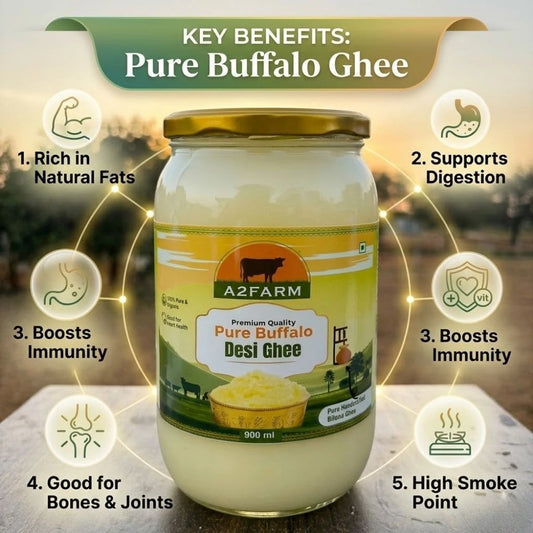
Pure Desi Buffalo Ghee is creamier and higher in fat than cow ghee, making it ideal for sweets, halwa, and rich cooking. It is a natural source of energy, supports bone strength, and has a longer shelf life. Buffalo ghee made by the Bilona method is especially rich in taste and nutrition.
What color should pure buffalo ghee be?
Pure Desi Buffalo Ghee is naturally off-white to pale cream in color, lighter than cow ghee. Cow ghee, especially A2 Gir Cow Ghee, is a deeper golden yellow. If buffalo ghee appears very yellow, it may be adulterated with cow ghee or artificial color.
How do I check if buffalo ghee is pure?
Three simple tests:
(1) Smell: pure buffalo ghee has a rich, natural aroma, not chemical.
(2) Cool a spoonful: it will solidify and turn pale/white.
(3) Heat test: pure ghee melts cleanly without sputtering. Always ask the seller for a third-party lab report, we provide ours on request.